Preschool Winter Crafts: A Practical Guide
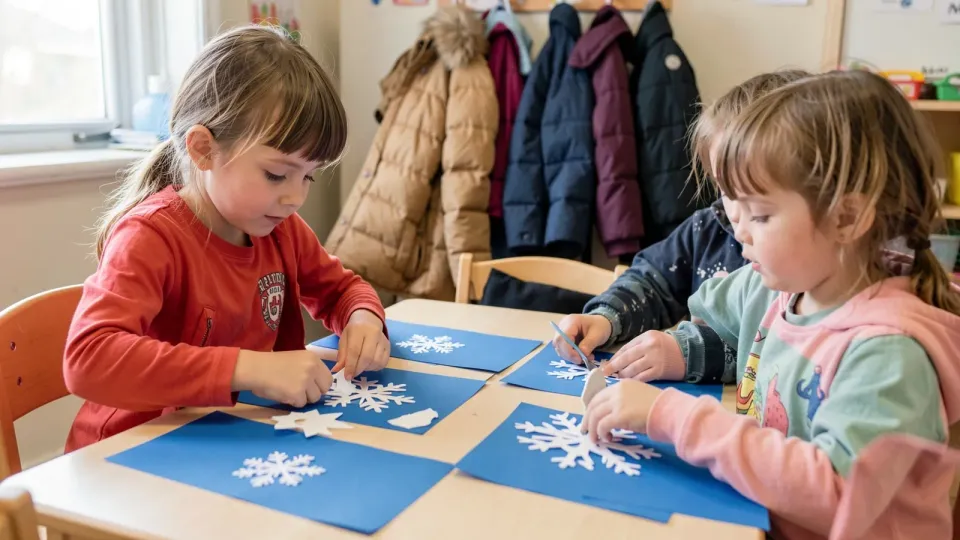
Winter is a season, not only a holiday
Preschool winter crafts have more room in them than another paper snowman. After the wrapping paper is gone, or on a grey afternoon that is not a holiday at all, children still want to make something of the cold, the early dark, and the things they dragged home in a coat pocket. This is a guide to those quieter projects: winter holiday crafts for preschool can include a celebration, but the better habit is a small making practice that lasts until spring.
Keep the child in view, not an ideal age. The CDC’s milestone resources are a useful, official reminder that three-, four-, and five-year-olds do not have the same hands or the same attention. Some will still mouth objects. Some can cut a rough line and then need to move their whole body for a while. Winter activities and crafts should be short, warm, and easy to leave when someone is cold or done.
For materials, we follow the same official baseline we use in December: the U.S. Consumer Product Safety Commission’s Art and Craft Safety Guide. Child-appropriate, clearly labeled supplies; no solvents or sprays; adults mix anything dusty; food stays off the art table; hands get washed.
Indoor and outdoor winter making, side by side
A good winter afternoon often has two temperatures. You go out in coats, you come in, and you make something of what you found or what you saw. You do not need a perfect snowfall. Bare branches, a bright window, and a wet boot print on the mat are enough.
| Setting | Project | What the child actually does | Adult work, and a caution |
|---|---|---|---|
| At the window, late afternoon | Tissue or paper “stained glass,” or a simple snowflake collage on wax or baking paper | Tearing, placing, deciding what is a star and what is a window | Tape and hanging are yours; keep small loose pieces off the sill if a younger child can reach |
| Kitchen table | Mitten or boot collage from leftover envelopes and fabric scraps | Choosing colors, gluing, adding a “lost mitten” story if they want | Pre-cut a mitten shape if scissors are still hard; skip tiny buttons |
| After a walk | Pocket museum: a tray or lid for large finds, then a drawing or rubbing of one of them | Choosing what was interesting, drawing, dictating a label | No berries, mushrooms, or small hard seeds on the art table; wash hands after handling outdoor things |
| Outdoors, if you can stand still for five minutes | Water, a tray, and found leaves or pine needles left to freeze overnight | Arranging, then looking the next day, then talking about what changed | This is weather-dependent and slippery; adults handle trays and ice; do not taste the ice |
| On the floor, big paper | A winter mural in two colors: a dark wash and a white or pale stamp | Large-arm painting, stamping with a sponge or a cut potato | You cut the potato; use washable paint; put newspapers down; store paint up high after |
| Quiet corner | Paper cut “tracks” of birds or boots, or a simple folded book of the week’s weather | Folding with help, scribbling, sticking one thing on each page | Keep it to a few pages so the book can actually be finished |
If you want a “winter animal” craft, make it from paper and large pieces, not from a pile of pom-poms and googly eyes that a three-year-old can swallow. A drawn owl on a cardboard roost is less glamorous and much easier to live with.
A few projects we return to when the light goes early
Torn-paper snow: white and grey scraps, including junk mail, torn by hand and glued onto a darker sheet. No scissors required. The tearing is useful work for small hands, and the picture can stop whenever the child is finished.
Mitten pairs that do not match: trace one hand on folded paper, cut (adult or child, depending on skill), and decorate each mitten differently. Hang them on a low string. This is a good craft for talking about lost things and about warmth, without needing a lesson plan.
Branch drawing: bring in one bare, legal, fallen twig, put it in a jar, and draw it with a soft pencil or a crayon. Then draw it again after the child wraps a bit of yarn around it. Same branch, two pictures. It takes almost no supplies and usually surprises adults more than children.
Ice-tray faces or shapes, if you have freezer space: large pieces only, in water, to look at later. This sits on the line between craft and play. Do not add food coloring to something a child might lick unless you are prepared for that, and do not present ice as a snack and an art material at the same time.
A weather book: four sheets of paper, stapled by an adult, with one word the child chooses (“wet,” “dark,” “wind”). They draw whatever that day felt like. This is the project that still works when you are tired of glue.
Keeping winter crafts from becoming a second job
Set a timer in your head, not for the child. Twenty minutes of making and ten minutes of cleanup is a full session. Put away the tray as a whole. Wet pictures go to one drying spot, not the dining chairs. If a project needs overnight drying or freezing, say so at the start so the child is not waiting for a finished object that will not be ready before bed.
Dress for mess even in winter. A big shirt over a sweater is easier than a lecture about the nice jumper. Washable paint only. The CPSC guide is explicit about solvents, sprays, and unlabeled leftover supplies; leftover adult varnish from a furniture project has no place here.
For mixed-age homes, put the small or mouthable materials away before the younger one wakes from a nap. Preschool winter activities and crafts should not depend on a three-year-old policing the beads.
A practical checklist before you start
- The project suits this afternoon’s energy and this child’s hands
- Supplies are child-safe, labeled, and not leftover adult chemicals
- Outdoor finds are large, non-toxic-looking, and not for eating
- Ice, water, and walks have a slip and warmth plan
- A younger sibling cannot reach the small pieces
- You know where the work will dry, and when you will call it finished
- Hands and table will be washed before the next meal
Questions that come up on grey afternoons
What if we have no snow and no craft cupboard?
You already have paper, a pencil, and a window. Draw the view, tear paper for a pale sky, or make the four-page weather book. Winter crafts for preschool are more about noticing than about a themed kit.
Are pine cones, chestnuts, and seed pods a good idea?
A few large, clean, dry pine cones can be, if you watch for peeling bits and keep them off the snack table. Small seeds, nuts, and anything that looks like food are a poor fit for preschoolers who still taste objects. When in doubt, draw the object and leave it outside.
How do I include winter holidays without doing the same Christmas tree again?
Use light, food shared at a table, and family stories as your theme, and keep the making simple: a card, a paper lantern shape an adult has cut, or a collage of what you ate together. You do not need a new character cutout for each date.
My child wants to paint every day. Is that too much?
Not if the setup is small and the cleanup is real. One tray, two colors, a time limit, and a drying spot will teach more than a complicated craft you only have the patience for once. Put the paint away when you are done so it stays special enough to want again.